The Scrolling Curator
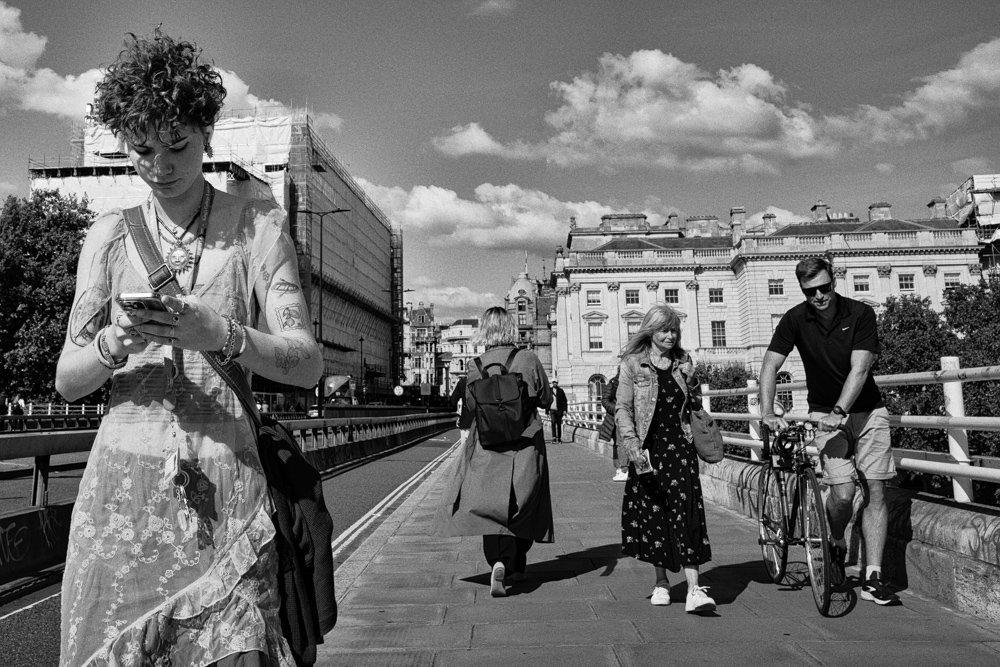
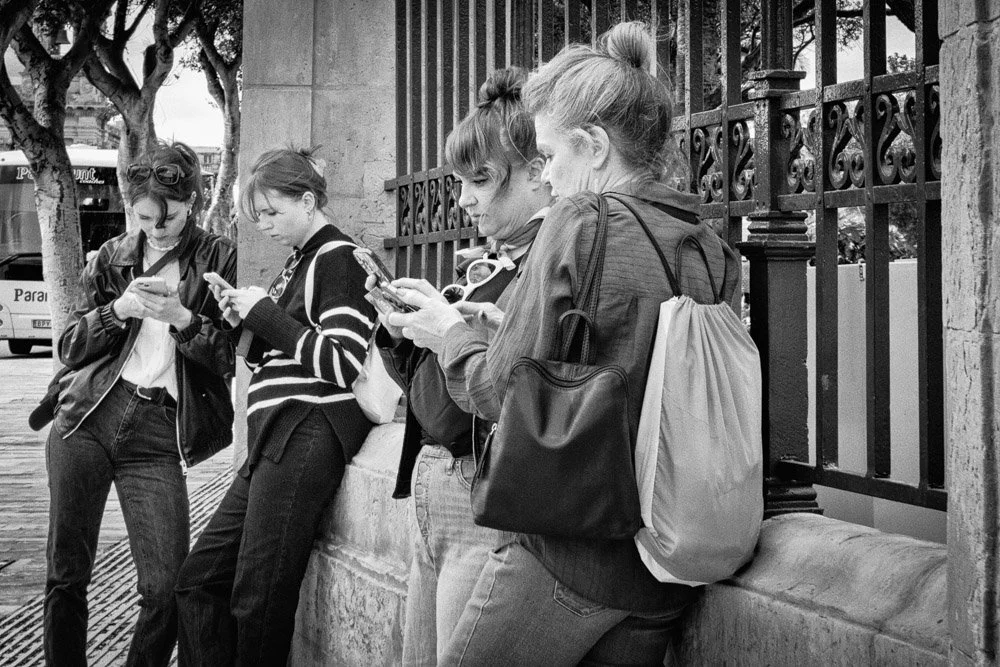
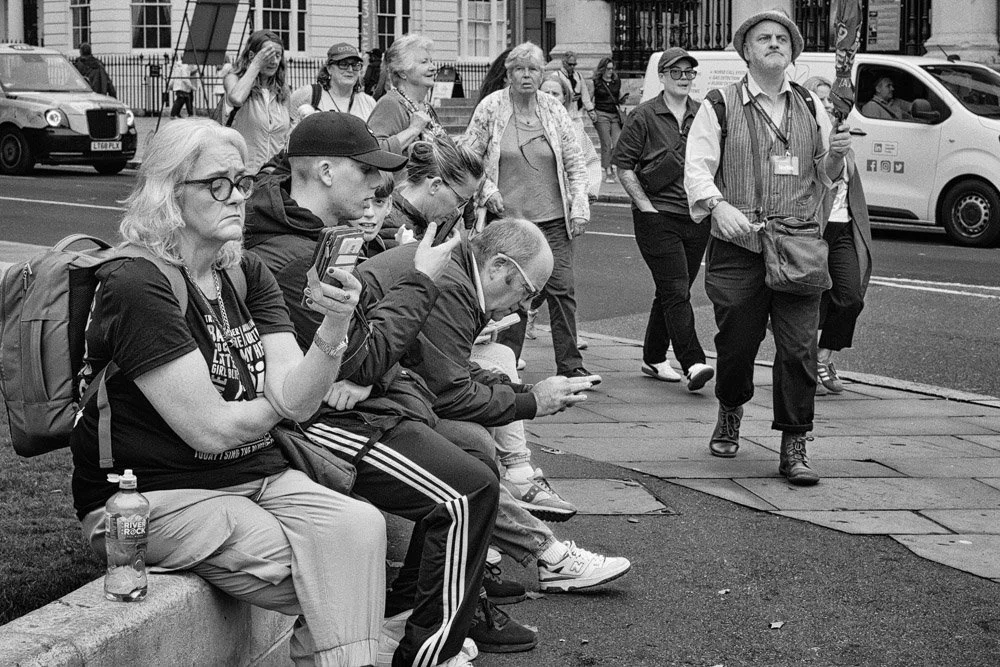
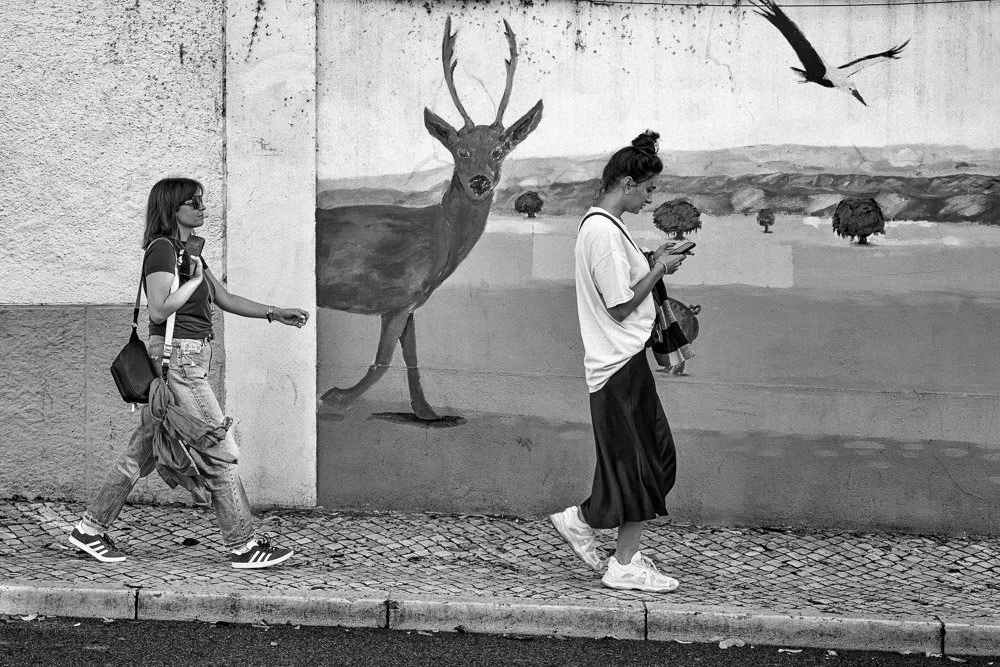
I have lost count of the number of photographs I have taken where someone is using, or perhaps I should say glued to, a mobile phone. Heads down, thumbs moving, oblivious to what is unfolding around them as they message or scroll. Looking is no longer directed at the street, but at the screen. There is nothing inherently wrong with this, aside from the occasional safety concern of stepping into traffic. For most of us, it has simply become normal. I have done the same, perhaps not so much when walking, as I usually have a camera in hand, but on trains, tubes, and buses I often spend my time looking at my phone.
There are, however, moments when it does unsettle me, particularly when it comes to how photographs are consumed. A new kind of curator has emerged, the thumb scroller. Not the traditional figure of the gallery or the editor’s desk, but the everyday spectator, scrolling in spare moments and deciding what deserves a pause and what does not. In this economy of seeing, attention becomes a form of currency, and visibility begins to resemble value. What does this do to photography itself, not only in the way images are viewed, but in how they are made, and in what photographers begin to believe is worth taking in the first place?
Thanks to photography, I have learnt over time a particular kind of seeing, one that forces me to stay attentive and appreciate the moment. Nine times out of ten that moment will be quite mundane, a half-glance from a stranger, the patterning on a wall, or simply the texture of light. Photography takes time and effort, and the images rarely justify the labour in any practical sense. Still, it remains a labour of love, and the sheer physicality of walking is a tonic in itself.
Scrolling trains a different kind of looking. It is not built around attention, but around replacement. The viewer is not encouraged to linger, only to keep moving. This does not make the viewer shallow, it simply describes the conditions. The feed rewards speed and instant legibility, and anything that needs a second look begins at a disadvantage.
The trouble is that photographs are now judged inside that environment. A street photograph is increasingly encountered as a thumbnail in a crowded stream, competing for a pause. Images are not assessed slowly, with context or sequencing, but through a rapid decision, stop or move on. That decision becomes a form of selection, and selection becomes visibility.
Those pauses add up. Work that performs well online is more likely to circulate, be shared, and be remembered, and that traction begins to resemble proof of value. Even opportunities that once depended on editors, publishers, or curators can now be influenced by whether an audience already exists.
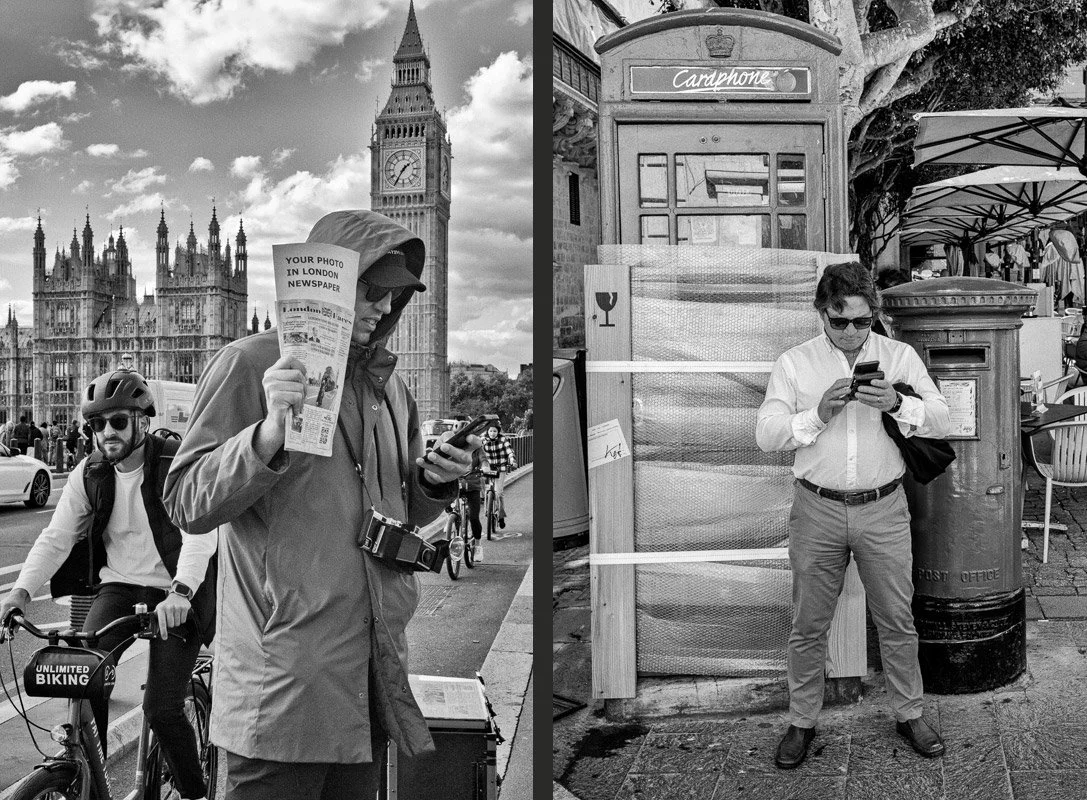
This is where the scrolling curator becomes a credible force. The photograph is now judged in motion, surrounded by other images all vying for attention, often with no visual connection at all. In that setting, reach is less a measure of depth than a measure of what managed to hold attention.
At this stage I need to stand back, step off my soapbox, and accept that this is not a point of view against the audience. The scroller may be a fellow photographer, a student, a collector, a gallerist, or even a publisher. In many cases, these are the very people who keep photography alive beyond the screen. The problem lies with the confines of the handheld device, and the pressure to keep up with a relentless stream of imagery, where attention is fragmented and speed counts.
At phone scale, it is inevitable that a photograph is read differently. Subtle relationships and the quieter tones of a frame can be lost. The image has to declare itself quickly, not because the viewer lacks patience, but because the platform encourages speed.
This is where the medium begins to shape the message. Not in a dramatic way, but through a gradual recalibration of what feels worthwhile. Photographs that shout tend to rise to the top, while those that reward a slower gaze can struggle to gain traction. It is not that one is better than the other, but that the conditions of viewing begin to favour a particular kind of image, and over time that preference starts to feel like taste. None of this is entirely new, but the speed and scale of it are.
There is also something faintly circular about it. The street photographer documents a world absorbed by screens, only for the photograph itself to return to the screen, where it is consumed in much the same distracted manner.
Once visibility starts to resemble value, it is not only photographers, and other artists, who feel the shift. Institutions do as well. Publishers, galleries, and festivals are not immune to the pull of a social media following.
In that context, an online presence can begin to function as reassurance. Not as proof that the work is good, but proof that it has found a public, that it can travel, and that it can gather interest beyond a small circle. It is a pragmatic consideration, and perhaps an unavoidable one. A book needs buyers, an exhibition needs visitors, and even the most thoughtful programme must survive the realities of attention and funding.
The result is a strange inversion. In the past, photographers often relied on institutions to provide support and visibility. Now, those same patrons and curators may also factor in the merits of an on-screen audience. It is a far larger audience in sheer numbers, but also a more fragmented one, dispersed globally and shaped by the fickleness of the feed.
If this kind of visibility helps to open doors, then invisibility can quietly close them. Photographers have to weigh up the pros and cons of feeding the scrolling machine, because work that generates likes does not necessarily translate into work that holds together as a coherent body of work. The temptation is to follow the path that performs well on these platforms, even when it pulls the photographer away from discovering a visual style that truly serves the wider project.
The compromise is rarely dramatic. It is not a sudden decision to chase approval, but a gradual shift in instinct. The edit begins to favour immediacy, and over time that can become habitual. Shaping the work to suit the flow of the feed can cloud the deeper logic of an overall body of work. If it starts intruding at the photographic stage, street photography becomes less a place to observe and more a place to produce.
Perhaps that is the quiet cost of the scrolling curator. Not that the work disappears, but that it becomes slightly louder than it needs to be, shaped by the demands of reach rather than the deeper satisfaction of seeing.
In the end, this is not a call to reject the social feed, or to retreat into nostalgia with rose-tinted glasses. These platforms are simply where photographs now live, and where many people first encounter them. Is it the ideal vessel for showcasing considered photography? In my view, not at all. Still, if you cannot beat the system, you join it, but you do not need to sell your soul in the process.